
Stuck on what your next chess move should be? Cut through the uncertainty with tactics that help you immediately in-game. This article zeroes in on the precise thinking behind successful moves, from understanding board positions to predicting your opponent’s plans. Expect no fluff, just the essentials for your next winning move.
Key Takeaways
Master chess openings by evaluating the board, understanding your opponent’s threats, and planning multiple moves ahead for a strategic advantage!
Control the middlegame by dominating the center, adapting to open vs. closed positions, and skillfully exploiting imbalances to outsmart your opponent.
Secure your endgame victory by pushing for pawn promotion, maintaining active pieces over material wealth, and recognizing key checkmate patterns!
Decoding Your Next Move

Every chess player, akin to a general planning a battle, requires a strategy before making their initial move. In chess, the chess opening phase is like the initial stage of a battle, where opening moves play a crucial role. While the game begins with a set starting position, the possibilities rapidly multiply, leading to an astronomical number of possible positions.
Adhering to the principles of opening theory, it becomes necessary to assess the position, comprehend your opponent’s threats, and plan subsequent moves. It’s like solving a complex puzzle where every move sets the course for the rest of the game.
Assessing the Position
Assessing the position is like taking a snapshot of the battlefield. You need to consider factors such as:
King safety
Material balance
Piece activity
Pawn structure
Central control
Just as a commander assesses the terrain and the enemy’s strength and position, a chess player evaluates the position on the board. Comprehending the position profoundly assists you in selecting optimal chess openings, leading to a successful endgame.
Isn’t it incredible how a keen observation and understanding of the chessboard can significantly influence the course of the game?
Identifying Opponent’s Threats
Now, what’s a battle without the enemy? Identifying your opponent’s threats is just as crucial as assessing the position. It’s like having a radar that spots incoming attacks. It becomes crucial to watch for forcing moves such as checks, captures, and threats, and to analyze their potential repercussions considering your opponent’s piece activity and pawn structure.
Remember, chess is a game of minds, and understanding your opponent’s intentions is half the battle won!
Planning Ahead
As they say, failing to plan is planning to fail. In chess, planning ahead is not just about envisioning your next move, but it’s about picturing the game several moves ahead. Whether you have a strong dark squared bishop or an advanced pawn, you need to formulate a plan that leverages its power. Your strategy should be designed not only to leverage your strengths but also to mitigate your weaknesses and counteract your opponent’s strategies.
Much like a general planning on the battlefield, chess players formulate strategies on the chessboard. It’s all about the thrill of outsmarting your opponent and staying one step ahead!
Opening Strategies: Setting up for Success

Having decoded your next move, it’s time to plunge into the heart of the battle – the opening! In chess, the opening is the initial stage of the game where you set up your pieces for the ensuing struggle. You aim to control the center, develop your pieces, and ensure your king’s safety.
Regardless of whether you’re playing the King’s Indian Attack or the Sicilian Defense, honing your opening strategies, such as the king’s indian attack, is pivotal to pave your path to success.
The Power of Pawn Structure
Pawns may be the least valuable piece in chess, but the structure they form is a vital aspect of your position. Pawn chains, for instance, create a strong presence in the central squares, providing more space for your pieces and directing their movement towards the center. This can be compared to constructing a fortress that not only protects your king but also dominates the battlefield.
The power of pawn structure is truly a spectacle in chess!
Deploying the Minor Pieces
Just like the foot soldiers in a battle, the minor pieces (knights and bishops) play a crucial role in the opening phase of chess. Deploying the minor pieces to control the center and maximize their influence on the board is key to a successful attack.
Effective deployment of minor pieces, whether it’s the knight overcoming obstacles or the light squared bishop piercing diagonals, can significantly enhance your game.
King Safety: The Priority
In the game of chess, the king is the most precious piece. Ensuring the safety of the king is a top priority in the opening phase. This is usually achieved by castling, which moves the king to a safer position and brings the rook to a more active place.
Bear in mind, an unprotected king can lead to catastrophe. So, ensure your king’s safety!
Middle Game Mastery: Key Concepts

Having established a solid foundation in the opening, you’re now ready to navigate the complexities of the middlegame. This is the phase where the real battle begins, with tactics and strategy interweaving in a complex dance. This phase involves asserting control over the center, comprehending the subtleties of open and closed positions, and leveraging imbalances to your favor.
Are you ready for the thrill of the middlegame?
Dominating the Center
The center of the chessboard is the heart of the battlefield. Controlling the central squares restricts your opponent’s options and creates attacking opportunities. It’s like commanding the high ground in a battle, providing a vantage point from which to launch your attacks.
Dominating the center, either by physically occupying it with pawns or controlling it remotely with your pieces, is instrumental to securing victory in chess.
Open vs Closed Positions
Just as a battlefield may be open or crowded with obstacles, a chess game can have open or closed positions. In an open game, the pawn structures don’t block the center, allowing for rapid piece movement. In contrast, a closed game is characterized by a locked pawn center, limiting the scope of long-range pieces.
Modifying your strategy according to the position on the board is an indispensable skill in chess.
Exploiting Imbalances
In the heat of the middlegame, the position on the board often becomes imbalanced, with disparities in material, pawn structure, and piece activity. Learning to exploit these imbalances can give you a decisive edge over your opponent. It’s like finding the weak points in your enemy’s defense and striking where it hurts the most.
Are you prepared to leverage imbalances and swing the game in your favor?
Endgame Essentials: Securing Victory
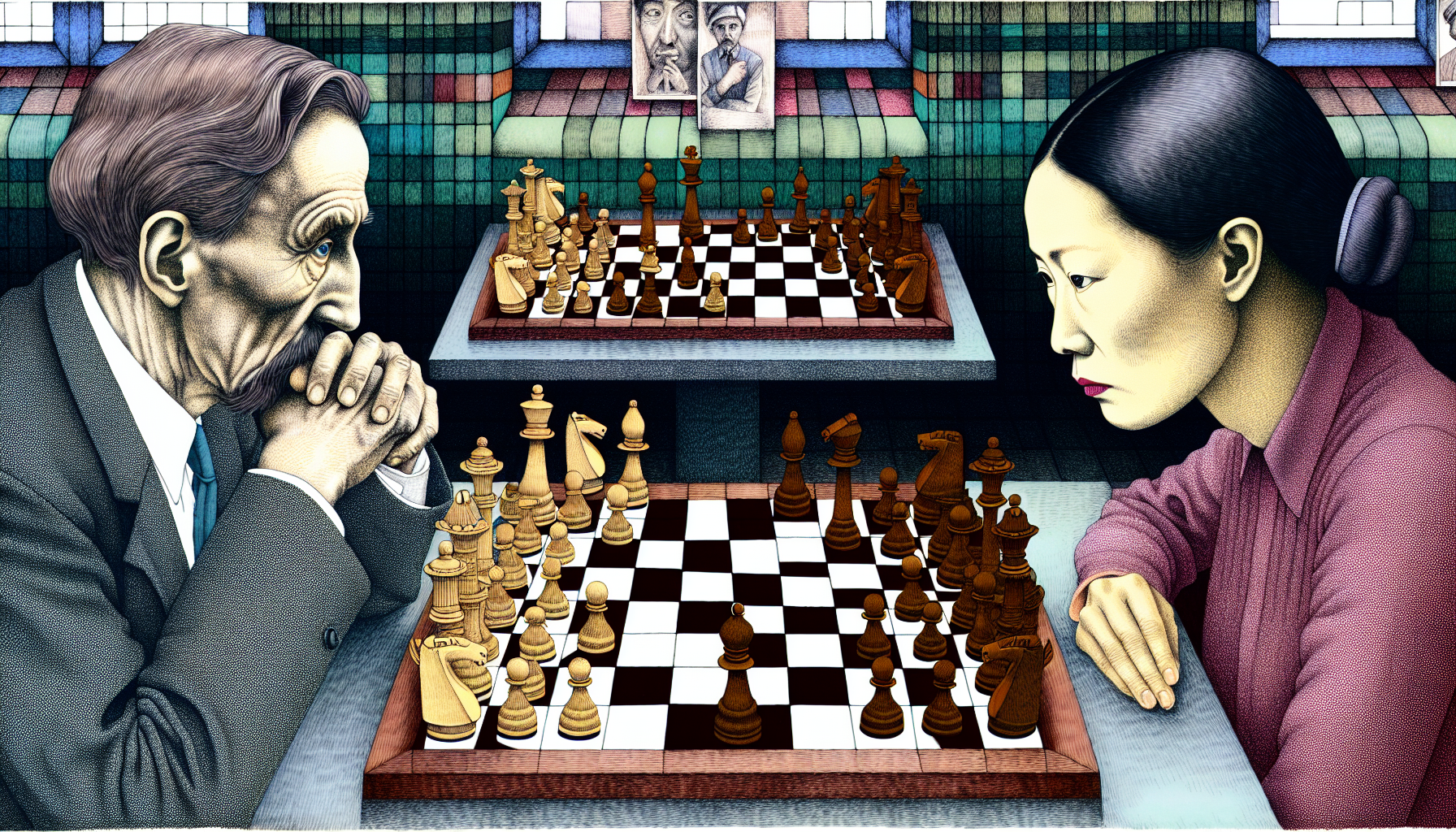
As the dust settles and the endgame approaches, it’s time to convert your advantages into victory. The endgame is where the kings step into the limelight, and every pawn becomes a potential queen. It’s about promoting your pawns, prioritizing activity over material, and recognizing checkmate patterns to deliver the final blow.
Are you ready to secure your victory in the endgame?
Pawn Promotion Tactics
During the endgame, even a modest pawn can rise to prominence by transforming into a more powerful piece. Whether it’s advancing a pawn with the support of your king or other pieces, or creating a passed pawn through trades or sacrifices, pawn promotion can be a game-changer.
Are you ready to crown your pawns and secure your victory?
Activity Over Material
During the endgame, activity tends to outweigh material. An effectively coordinated, albeit less valuable, army can often outmaneuver a more materially superior but uncoordinated army. Whether it’s bringing your king into the action, activating your rooks, or coordinating your minor pieces, prioritizing activity over material can be the key to victory in the endgame.
Checkmate Patterns
The ultimate goal of every chess game is to deliver checkmate. Identifying prevalent checkmate patterns can assist you in recognizing opportunities to strike a decisive blow. Whether it’s the back-rank checkmate, the smothered mate, or Anastasia’s mate, mastering these patterns can help you secure your victory in style.
Aggressive Opening Repertoires

If you’re the kind of player who likes to take the initiative and create tactical fireworks, then aggressive openings are for you. Whether it’s the Sicilian Defense, the King’s Gambit, or the Dutch Defense, these openings can lead to sharp, unbalanced, and exciting games.
Are you prepared to confront the challenge head-on?
The Sicilian Defense
The Sicilian Defense is among the most favored and aggressive openings in chess. With its asymmetrical pawn structure and potential for counterplay, the Sicilian Defense is a favorite among players who prefer complex and tactical battles.
Ready to take the battle to your opponent with the Sicilian Defense and the Italian Game?
The King’s Gambit
The King’s Gambit is a bold opening that showcases an aggressive resolve right from the beginning. By offering a pawn sacrifice, White aims to seize the initiative and create an open position ripe for tactical battles.
Are you ready to turn the tables on your opponent with the King’s Gambit?
The Dutch Defense
The Dutch Defense, although risky, is an aggressive opening with the objective of undermining White’s control over the center and initiating a counterattack. Despite its risks, the Dutch Defense can lead to exciting and unbalanced games, especially in the hands of an adventurous player.
Are you ready to take the fight to your opponent with the Dutch Defense?
Solid Opening Repertoires
On the other end of the spectrum, we have solid openings that prioritize positional play and structure over immediate tactics. Openings like the Queen’s Gambit Declined, the English Opening, and the French Defense fall into this category. These openings are perfect for players who prefer a more strategic and less tactical battle, and can be considered some of the best chess openings for this style of play.
The Queen’s Gambit Declined
The Queen’s Gambit Declined is a solid and reliable defense that focuses on maintaining a sturdy pawn structure and harmonious piece development. It’s like building a fortress that can withstand the onslaughts of your opponent’s attacks.
Are you ready to stand your ground with the Queen’s Gambit Declined?
The English Opening
The English Opening is a flexible opening that can lead to a variety of pawn structures and plans. It’s like a Swiss army knife, offering a wide range of options and strategies to cater to different styles and situations.
Are you ready to keep your opponent guessing with the English Opening, while also being prepared for the classic 1 e4 e5 2 moves?
The French Defense
The French Defense is a solid opening that focuses on undermining White’s control of the center and launching a counterattack. Despite its defensive nature, the French Defense can lead to complex and unbalanced positions, offering plenty of opportunities for strategic play.
Are you ready to turn defense into offense with the French Defense?
Adapting to Your Opponent’s Moves
Chess is not played in isolation. Adjusting to your opponent’s moves is a significant part of the game. Whether it’s recognizing tactical motifs, switching plans mid-game, or launching a counterattack, learning to respond effectively to your opponent’s moves can make the difference between victory and defeat.
Recognizing Tactical Motifs
Recognizing tactical motifs is like having a secret weapon in your arsenal. By identifying common patterns and tactics, you can exploit weaknesses in your opponent’s position and turn the tide in your favor. Some common tactical motifs to master include:
Pins
Forks
Skewers
Discovered attacks
Mastering these motifs can give you an edge over your opponent.
Switching Plans Mid-Game
The capability to modify strategies mid-game in the constantly evolving scenario of a chess game is a prized skill. Whether it’s due to an unexpected move from your opponent, or a sudden realization of a better plan, being able to adapt your strategy on the fly is a mark of a strong player.
Counterattacking Effectively
Occasionally, a strong offense serves as the best defense. Seizing opportunities to launch a counterattack can often turn the tables on your opponent. Whether it’s exploiting a weak spot in your opponent’s defenses, or striking back when they least expect it, mastering the art of the counterattack can be a game-changer.
Advanced Chess Tactics
As we delve deeper into the realm of chess tactics, we encounter more advanced concepts like sacrifices, pins, and forks. These tactics, while more complex, can provide a significant advantage in the right circumstances.
Are you ready to take your chess tactics to the next level in chess games?
The Art of Sacrifice
In chess, a sacrifice is a move that gives up a piece with the objective of gaining tactical or positional compensation in other forms. Whether it’s a dazzling queen sacrifice that leaves your opponent in shock, or a subtle pawn sacrifice that opens up a deadly attack, mastering the art of sacrifice can give you a powerful weapon in your chess arsenal.
Utilizing Pins and Forks
Pins and forks represent two of the strongest tactics in chess. A pin immobilizes an enemy piece, while a fork attacks two or more enemy pieces at once. Mastering these tactics can help you immobilize your opponent’s army and capture their pieces, turning the tide of the game in your favor.
Summary
In the riveting world of chess, every move counts and every decision matters. From the initial stages of the game where you decipher your next move, to the heart of the battle in the middlegame, and finally to the endgame where victory is secured, chess is a game of strategy, tactics, and constant adaptation. Whether you’re an aggressive player who loves sharp and tactical battles, or a positional player who thrives on solid and strategic play, mastering the art of chess strategy can elevate your game to new heights.
Conclusion
In the thrilling game of chess, every move, every strategy, and every decision can turn the tide of the game. Whether you prefer the aggressive playstyle with sharp and tactical battles or a more solid and strategic approach, understanding and implementing these principles can help elevate your game to new heights.
From the opening to the middlegame and finally the endgame, each phase of the game presents its own unique challenges and opportunities. Mastering the art of chess strategy, recognizing tactical motifs, and adapting to your opponent’s moves are all part of this enthralling game.
Whether you’re a beginner just starting out or an experienced player looking to improve, we hope this guide has provided you with valuable insights and strategies to enhance your chess game. Remember, the key to success in chess lies not just in knowing the right moves, but also in understanding the principles behind them.
So, set up your chessboard, get ready to make your move, and immerse yourself in the captivating world of chess!
 chesscornerblog.com
Leave a comment